Very few African markets are currently doing what Ghana did last week. In the space of 72 hours, the country launched a ten-year urban policy, commissioned an independent external audit of its entire housing system, and confirmed that capital from that same partnership is already in the hands of local lenders and developers. Policy, diagnosis and finance — moving together, in sequence, with dates attached.
On 28 July, government launched the National Urban Policy and Implementation Plan (2026–2035) alongside a National Slum Upgrading and Prevention Strategy, at the Ninth Session of the Ghana Urban Forum in Accra. Two days later, the Ministry of Works, Housing and Water Resources signed an agreement with the National Homeownership Fund and Shelter Afrique Development Bank to run a VIRAL diagnostic of the country’s housing ecosystem. On the same day, government confirmed that US$35.5 million has already been accessed by Ghanaian financial institutions and private developers through the Shelter Afrique partnership.
The Urban Forum ran under the theme of resetting Ghana’s urban future through national thinking and local action. On the evidence of last week, the reset is underway.
Three moves that fit together
What makes last week notable is not any single announcement — it is the sequencing.
The National Urban Policy is the framing document. Launched on behalf of President John Dramani Mahama by National Development Planning Commission Chairman Dr Nii Moi Thompson, it runs to 2035 and covers spatial planning, affordable housing expansion, climate resilience, urban governance, sustainable financing and digital tools for city management. It is a genuinely broad framework, and it was developed with support from the United Nations in Ghana and development partners rather than drafted in isolation.
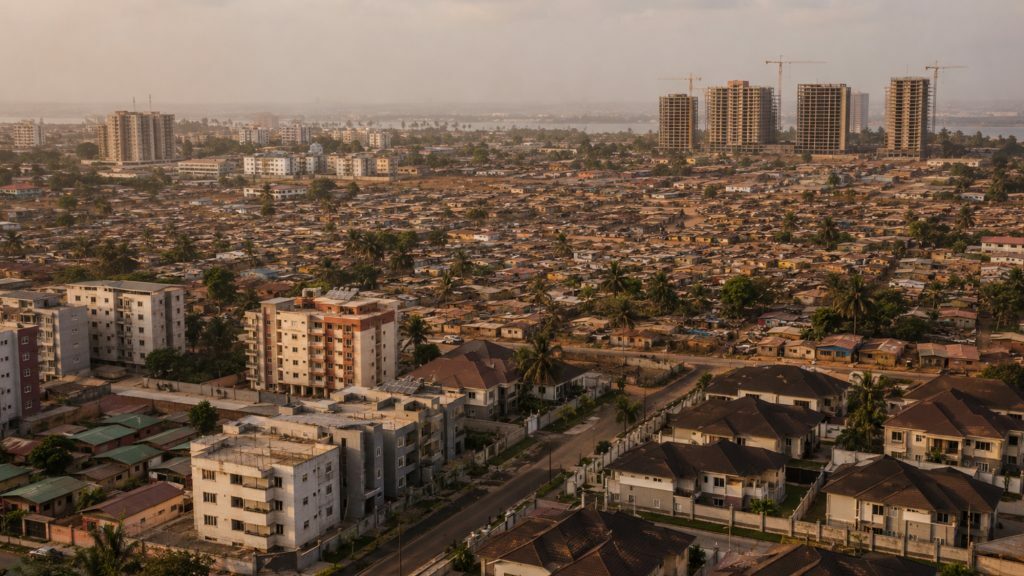
The VIRAL assessment supplies the evidence base beneath it. Shelter Afrique Development Bank uses the framework — Vision, Institutions, Regulations, Actors, Local Initiatives — to systematically audit a member country’s housing system and identify precisely where delivery slows down. Commissioning an external, structured diagnostic of your own system is not a small decision for any government, and it is the part of last week that should most interest investors. Shelter Afrique Managing Director Thierno-Habib Hann confirmed the exercise has two components: a diagnostic assessment, and the development of a country housing and urban development partnership strategy. Both are expected by December.
The finance layer is where it becomes tangible. The existing Shelter Afrique partnership has already mobilised US$35.5 million for local financial institutions and private developers — money drawn down, not pledged. Ghana is also moving to settle outstanding capital subscription obligations to the bank in order to unlock further financing and technical support, and has secured re-election to Shelter Afrique’s Board of Directors for a further three-year term beginning in July 2027. That is a country deepening its position inside a pan-African housing financier rather than simply borrowing from one.
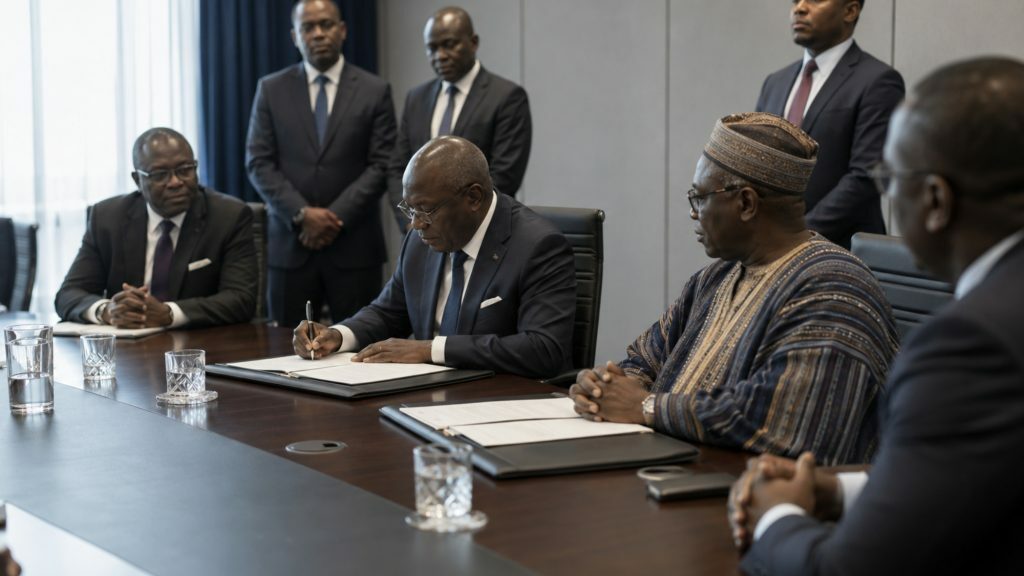
National Homeownership Fund Chief Executive Prosper Hoetu described the VIRAL agreement as a turning point, saying the resulting report and strategy would serve as a blueprint for identifying projects capable of attracting sustainable financing.
The scale of the opportunity
At the same Urban Forum, the World Bank’s Urban Resilience and Land Practice Manager, Madhu Raghunath, framed the investment case. Ghana’s 2019 Infrastructure Plan estimates that roughly US$37 billion is needed annually to build the infrastructure supporting economic growth and improved quality of life by 2047 — spanning energy, telecommunications, transport, water and housing.
She noted that Ghana is now among the most urbanised countries in Sub-Saharan Africa, with 57 per cent of the population living in cities and towns, and the urban population projected to more than double by 2050. Her emphasis was on integrated investment across transport, power, waste and housing, alongside stronger municipal financing and public-private partnerships — describing well-planned cities as central to Ghana’s jobs and productivity agenda.
The housing shortfall gives that its clearest expression. Works, Housing and Water Resources Minister Kenneth Gilbert Adjei told the Government Accountability Series in January 2026 that Ghana’s housing deficit stands at over 1.8 million units, with urbanisation projected to rise above 72 per cent by 2050. For developers and investors, a deficit of that size in a market that is actively reforming its enabling environment describes durable structural demand rather than a speculative window.
Snapshot: Ghana’s housing reset
| Item |
Detail |
| National Urban Policy |
Launched 28 July 2026; covers 2026–2035; paired with National Slum Upgrading & Prevention Strategy |
| VIRAL assessment signed |
30 July 2026 — Ministry of Works, Housing & Water Resources, NHF, Shelter Afrique Development Bank |
| VIRAL pillars |
Vision, Institutions, Regulations, Actors, Local Initiatives |
| Diagnostic due |
December 2026, per Shelter Afrique MD Thierno-Habib Hann |
| Financing already accessed |
US$35.5 million via Shelter Afrique partnership (local financial institutions and private developers) |
| Board position |
Ghana re-elected to Shelter Afrique Board of Directors, three-year term from July 2027 |
| Housing deficit |
Over 1.8 million units (Minister Kenneth Gilbert Adjei, January 2026) |
| Infrastructure investment need |
~US$37 billion per year to 2047 (Ghana Infrastructure Plan 2019, cited by World Bank) |
| Urbanisation |
57% urban now; projected above 72% by 2050 |
| Policy rate |
14.0% — held 22 July 2026; down from 28% in early 2025; next MPC decision 24 September 2026 |
| Next milestone |
National Conference on Housing Finance, later in 2026 |
A materially better financing environment
The macro backdrop supporting all of this has improved substantially. The Bank of Ghana delivered five consecutive rate cuts before pausing, bringing the policy rate from 28 per cent in early 2025 to 14 per cent today. At its 131st Monetary Policy Committee meeting on 22 July 2026, the Committee unanimously held at 14 per cent, with Governor Dr Johnson Asiama citing global uncertainty as the reason for waiting rather than any domestic weakness. First-quarter GDP growth reached 6.4 per cent, up from 6.2 per cent a year earlier, and the Bank’s Composite Index of Economic Activity grew 13.4 per cent annually in May.
Inflation has fallen dramatically from its 2022–23 peaks, sitting at 5.3 per cent in June — still below the Bank’s 6–10 per cent target band. The National Homeownership Fund has signalled that improving conditions could bring lending under its National Mortgage Scheme toward single digits, working with GCB Bank, Republic Bank (Ghana) and Stanbic Bank Ghana.
Investors should note two live variables. The cedi had depreciated 9.5 per cent against the US dollar year-to-date by mid-July, which matters for dollar-denominated return modelling. And with the easing cycle paused, mortgage rates are unlikely to fall much further in the immediate term. Neither undermines the direction of travel — but both belong in the model.
The test ahead is execution, not intent
Ghana has been candid that the challenge is delivery. Minister Adjei has repeatedly acknowledged that government cannot close the gap alone, noting that the private sector already delivers close to 90 per cent of Ghana’s housing according to Ghana Statistical Service figures, and calling on developers and financiers to scale up investment and align with national priorities. That framing is realistic, and it is the right one.
Several things are worth watching as the diagnostic progresses. Mortgage penetration remains below one per cent of GDP, which is the single largest constraint on effective demand — and the clearest opportunity for lenders willing to build the product. Pricing detail on programmes such as the District Housing Programme is still being finalised, so investors modelling against announced schemes should confirm specifications directly. And Ghana’s shortage is concentrated in affordable and mid-income stock, while much of the formal delivery pipeline has historically served the premium Accra market — a mismatch that represents open ground for developers willing to build where the demand actually sits.
None of these are reasons for caution about Ghana. They are the specific problems the VIRAL diagnostic exists to name, and the reason the December report is the most useful document on this market that will be published this year.
Where the industry joins the conversation: ARCE 2026, Accra, 14–16 October
The VIRAL diagnostic reports in December. The National Conference on Housing Finance sits later this year. Between those two milestones, Africa’s real estate industry gathers in the same city that produced last week’s announcements.
The Africa Real Estate Conference & Expo (ARCE 2026) runs 14–16 October 2026 at The Palms Convention Center in Accra. Now in its sixth edition and convened by the Ghana Real Estate Professionals Association (GREPA), the conference is built on three pillars: Policy & Regulation, PropTech Innovation and Sustainable Development. Its Policy pillar — building trust through clear frameworks and collaborative governance — describes precisely the work the VIRAL assessment is undertaking.
The timing is genuinely useful. ARCE brings government ministers, regulators, institutional investors, developers, banks, urban planners and PropTech firms into one room while the diagnostic is still being written. Given that the private sector delivers the overwhelming majority of Ghana’s housing, industry input at this stage strengthens whatever emerges in December. It is a rare opportunity for developers and financiers to help shape a national framework rather than react to a finished one.
One practical note for anyone considering attending: organisers have confirmed that Early Bird registration closes on 31 July 2026, with savings of up to 30 per cent on delegate fees. The three-day programme covers conference sessions, an exhibition floor and structured networking across the policy, investment, development and PropTech tracks.
Early Bird closes 31 July 2026 — save up to 30%
ARCE 2026 — Africa Real Estate Conference & Expo
14–16 October 2026 | The Palms Convention Center, Accra, Ghana
Policy · PropTech · Sustainability | Endorsed by GREPA
Local Delegate Registration International Registration Conference Website
What this means for African property investors
Ghana is currently one of the few African markets where policy reform, a credible external diagnostic and actual disbursed capital are moving in the same direction at the same time. That combination is rarer than it sounds, and it is the reason this week is worth attention rather than a headline.
The practical read: December is the date to diarise. The VIRAL diagnostic will name the specific institutional, regulatory and financing barriers holding back delivery. If it is published in full and its recommendations are costed, it becomes the most useful due-diligence document on the Ghanaian housing market in years. If it is published in summary form only, or its recommendations arrive without budget lines attached, treat it as signalling rather than reform.
Positioning-wise, the structural demand sits in affordable and mid-income stock, not in the premium Accra segment that has absorbed most formal capital. Investors should also weigh the currency exposure: cedi depreciation of 9.5 per cent year-to-date to mid-July materially affects dollar-denominated returns, and the central bank’s pause means the cheap-money tailwind has flattened for now.
Any yield or return figures quoted by developers marketing into this policy narrative should be read as developer estimates — not guaranteed. Verify title independently, confirm your agent’s licence with the Real Estate Agency Council before transacting, and price implementation risk into any model built on announced government programmes.
Sources
Related Articles